

Aurora Flight Test Program
Our flight test program is where Dawn’s vision for daily spaceflight takes shape. Each flight builds on the last, pushing the boundaries of what’s possible with rocket-powered, runway-operating suborbital spaceplanes.
Flying since 2016, beginning with its debut Mk-I rocket-plane, Dawn's program has advanced through successive flight campaigns, upgraded from jet engines to rocket-powered, increased cadence, altitude, speed, certification and operational complexity.
From early proof-of-concept hops to high-speed, high-altitude missions, our testing demonstrates the reliability, safety, and reusability needed for aircraft-like access to space.
This program is key to developing the Mk-II Aurora into a platform capable of multiple flights per day, leading the way to Sprint and the Mk-III orbital spaceplane. Browse the gallery below for a snapshot of each flight test campaign – milestones, key learnings, and the path forward.

Flight-62
Johns Hopkins Applied Physics Laboritory
What this test flight achieved:
-
Max speed in ascent Mach 0.94
-
Max altitude to 62,000 ft
-
Data Acquisition Payload
Flight-61
Scout Space
Dawn Aerospace’s Aurora spaceplane and Scout Space’s ‘Morning Sparrow’ payload have completed their first suborbital space domain awareness (SDA) demonstration flight, advancing new approaches to responsive space surveillance in Very Low Earth Orbit (VLEO).
What this test flight achieved:
-
Max speed in ascent Mach 1.03
-
Max altitude to 67,000 ft
-
First private company payload
-
Runway-based, rapid turnaround operations – faster data access than traditional space assets

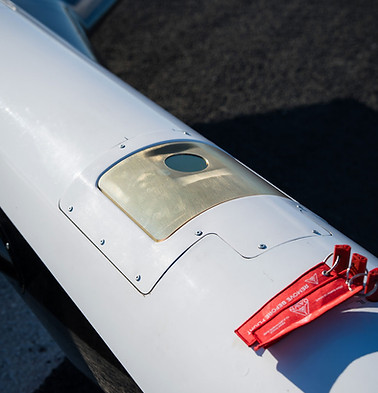
Flight-60
Arizona State University
Arizona State University's payload known as LEO-TIMS, is a compact thermal-infrared imager derived from heritage instruments that ASU has previously flown to Mars and soon to Europa, Jupiter’s icy moon. The mission sought to test how a scaled-down version of a planetary science camera performs in a fast, recoverable, and reflyable environment.
What this test flight achieved:
-
Max speed in ascent Mach 0.93
-
Max altitude to 54,000 ft
-
Over 20 minutes of infrared data for the entire duration of the flight
Flight-59
California Polytechnic University
California Polytechnic State University has become the first U.S. university to fly a student-built research payload on Dawn Aerospace’s Aurora spaceplane. Hear from James Powell, Chief Spaceplane Engineer and Co-Founder of Dawn Aerospace, as he comments on the significance of student hardware flying aboard Aurora.
What this test flight achieved:
-
Max speed in ascent Mach 0.7
-
Max altitude to 38,800 ft
-
First payload for university (data acquisition unit)
-
First flight from the Tāwhaki National Aerospace Centre


Flight-57
Supersonic Flight
Dawn Aerospace Achieves Historic Flight - Breaks Sound Barrier and Global Records
Multinational aerospace company Dawn Aerospace has made history with the successful supersonic flight of its Mk-II Aurora rocket-powered aircraft, making it one of the fastest privately-developed aircraft on the planet.
Achieved on 12 November 2024, with the Aurora surpassing the speed of sound for the first time, reaching Mach 1.1 and climbing to an altitude of 82,500 feet. This is over twice as high as commercial aircraft and marks the first time a civil aircraft has flown supersonic since Concorde.
What this test flight achieved:
-
The fastest aircraft ever to climb from ground level to 20 km.
-
First New Zealand-designed and -built aircraft to fly supersonic.
-
Highest altitude achieved by an aircraft flown from New Zealand.
This achievement signifies a major step toward operational hypersonic travel and daily space access, establishing rocket-powered aircraft as a new class of ultra-high-performance vehicles.
Flight-52 and 53
Two Flights in A Day
Dawn Aerospace’s Mk-II Aurora spaceplane demonstrator just pulled off something big: flying twice in 8 hours, hitting Mach 0.9 (950 km/h) and soaring to 63,000 ft over New Zealand’s South Island.
What this test flight achieved:
-
Proved same-day reusability = the holy grail of rocket flight systems
-
Fly, land, refuel, and go again in 4 hours